Is there a way to look up the owner of a license plate in Florida without having to call the FBI or the local police?
Have you ever found yourself needing to identify the driver of a specific vehicle in the Sunshine State? Perhaps a car abruptly cut you off, side-swiped your mirror, and sped off before you could get a good look at the driver. Maybe a mysterious vehicle has been parked abandoned on your private property for weeks, gathering dust. Or, perhaps you are simply looking to purchase a used car from a private seller and want to verify their claims about the vehicle’s history before you hand over your hard-earned money.
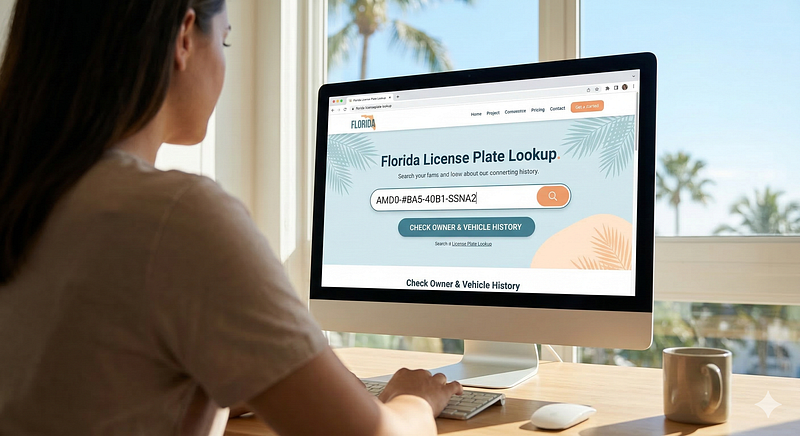
Whatever your reasons may be, your first instinct might be to involve law enforcement. However, many Floridians find themselves wondering: is there a way to look up the owner of a license plate in Florida without having to call the FBI or the local police? The short answer is yes, but it comes with strict legal caveats. Performing a Florida license plate lookup owner search is absolutely possible, but it is highly regulated by state and federal laws to protect citizen privacy. Let’s dive into the legalities, methods, and alternative options available.
Understanding the Law: The Driver’s Privacy Protection Act (DPPA) and Florida Statutes
Before attempting any form of search, it is critical to understand the federal and state laws that govern personal vehicle data. In 1994, Congress passed the Driver’s Privacy Protection Act (DPPA). This federal law was enacted specifically to protect the personal information of licensed drivers from being freely accessible to the general public. Before the DPPA, anyone could walk into a local DMV, hand over a license plate number, and walk out with the registered owner’s home address and full name. This led to serious safety and privacy concerns.
In Florida, the state strictly adheres to DPPA regulations and adds its own privacy protection through Florida Statute 119.0712(2). The Florida Department of Highway Safety and Motor Vehicles (FLHSMV) will not release the name, address, or social security number of a vehicle owner to just anyone who asks. However, the DPPA does include specific exemptions — meaning there are permissible uses for obtaining this information without filing a police report.
Permissible Uses: Who Can Legally Access Owner Information in Florida?
To legally perform a Florida license plate lookup owner search that reveals personal details, you must fall under one of the DPPA’s exempted categories. Florida law requires strict adherence to these exemptions. Common permissible uses include:
- Vehicle Safety and Theft: Information can be accessed for matters directly related to motor vehicle safety, recalls, and auto theft.
- Legal Proceedings: If you are actively involved in a civil, criminal, administrative, or arbitral proceeding in any Florida court, you can use a license plate to find the owner.
- Insurance Purposes: Auto insurance companies routinely look up plate numbers to investigate claims or conduct anti-fraud activities.
- Towing and Impoundment: If you own a private towing company or an impound yard in Florida, you are legally permitted to find the owner of an abandoned or towed vehicle so you can properly notify them.
- Private Investigators: Licensed private investigators and professional security services can access this information, provided they are doing so strictly for one of the legally permissible reasons outlined by the DPPA.
Method 1: Requesting Records Directly from the FLHSMV
If you have a legally permissible reason under the DPPA, you can request vehicle owner information directly from the state. The FLHSMV requires individuals to submit an official form, such as Form 90510 for motor vehicle records, to request this data.
When submitting this documentation, you must provide the license plate number or Vehicle Identification Number (VIN). More importantly, you must certify, under penalty of perjury, that you are requesting the information for a lawful purpose authorized by law. You will explicitly state your permissible use and provide your own identifying information. There is usually a small administrative fee associated with processing this official request. While this method is highly accurate because it pulls directly from the state’s official database, it is not an instant process. It requires physical paperwork, payment, and a waiting period for processing.
Method 2: Utilizing Online License Plate Lookup Tools
For those who want faster results or are primarily interested in the vehicle’s history rather than the personal identity of the owner, online third-party databases are incredibly useful tools. The digital age has brought about numerous data aggregation services that compile public records, vehicle histories, and title data into easily searchable online platforms.
For reliable searches specifically tailored to the state, you can visit https://floridalicenseplate.com/ to uncover a wealth of information regarding a specific automobile. When you run a search through a reputable online database like this, you can often find out the vehicle’s make, model, year, and engine specifications in mere seconds. Furthermore, these detailed reports can reveal critical historical data, such as whether the car has a salvage title, if the odometer has been illegally rolled back, if it has sustained flood damage, and if the vehicle has been involved in reported accidents.
It is important to note that these online platforms are strictly bound by DPPA regulations. If you use these services to search for personal information, the website will securely require you to confirm your permissible use before displaying sensitive data points. Without a valid permissible use, the service will still provide the vehicle’s non-personal history, which is fully legal and easily accessible to the general public.
Method 3: Hiring a Licensed Private Investigator in Florida
What if you have a valid legal reason — such as preparing for a civil lawsuit against a driver who damaged your property in a parking lot — but you find state bureaucratic forms too slow for your needs? In this scenario, hiring a licensed private investigator (PI) in Florida is an excellent alternative to calling the local police.
Private investigators have access to specialized, premium databases that are not available to the general public. Because they are licensed professionals, they are pre-vetted by the state to handle sensitive information in strict compliance with the DPPA. A PI can take the license plate number you provide, verify your legal reason for needing the information, and efficiently track down the registered owner’s name and residential address. While this is the most expensive route, it is often the most efficient way to gather actionable intelligence for legal matters without needlessly burdening local law enforcement agencies.
Conclusion
In conclusion, you absolutely do not need to call the FBI, the Florida Highway Patrol, or your local county sheriff’s department just to look into a license plate. Whether you are dealing with a stressful legal dispute, managing an abandoned car on your property, or you want to investigate the history of a used vehicle before making a large financial investment, there are proper civilian avenues available. Conducting a Florida license plate lookup owner search is entirely feasible as long as you understand and respect the legal boundaries set by the Driver’s Privacy Protection Act. By utilizing state resources, leveraging comprehensive online tools, or employing a licensed private investigator, you can find the answers you need legally, safely, and responsibly.